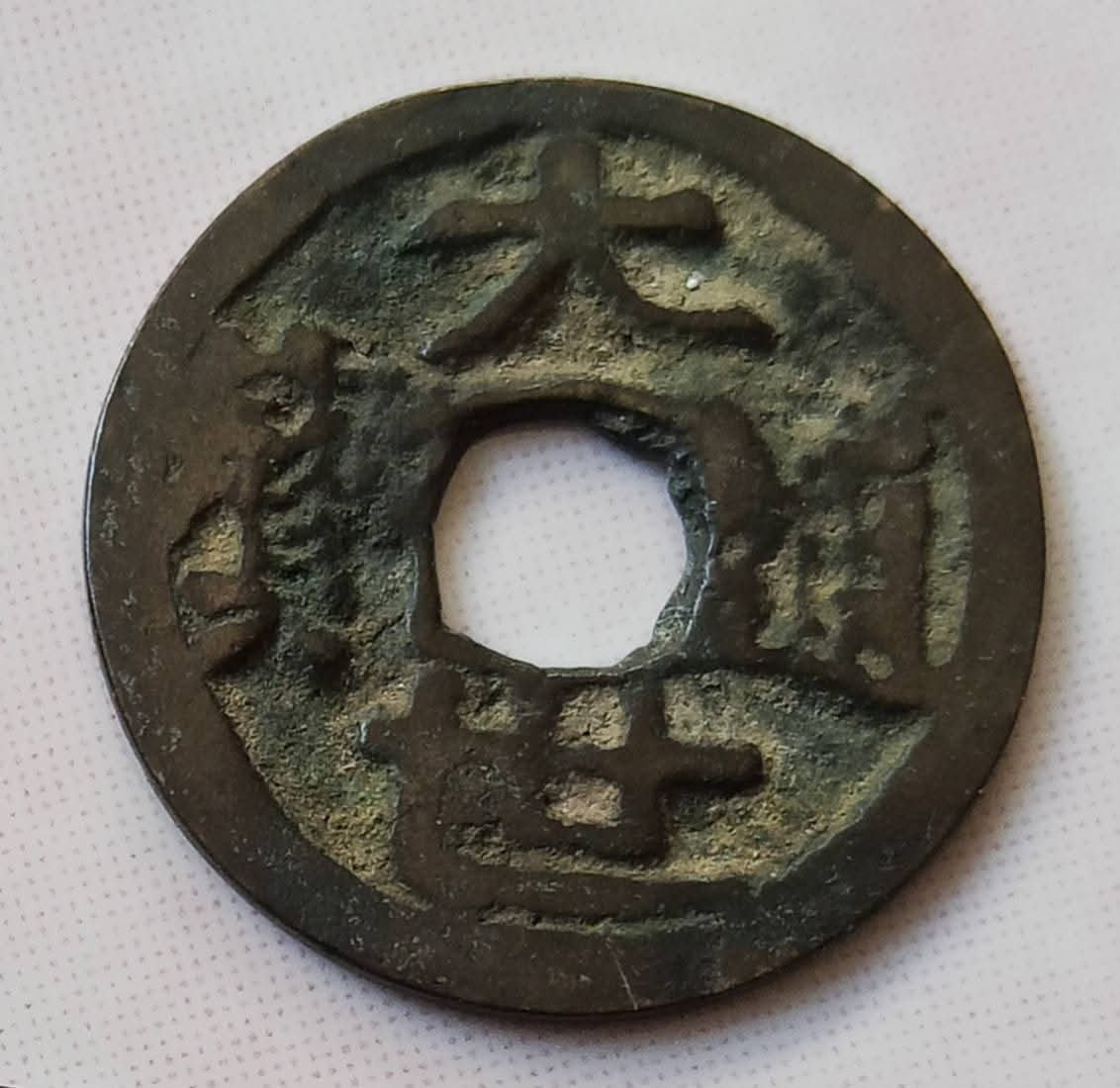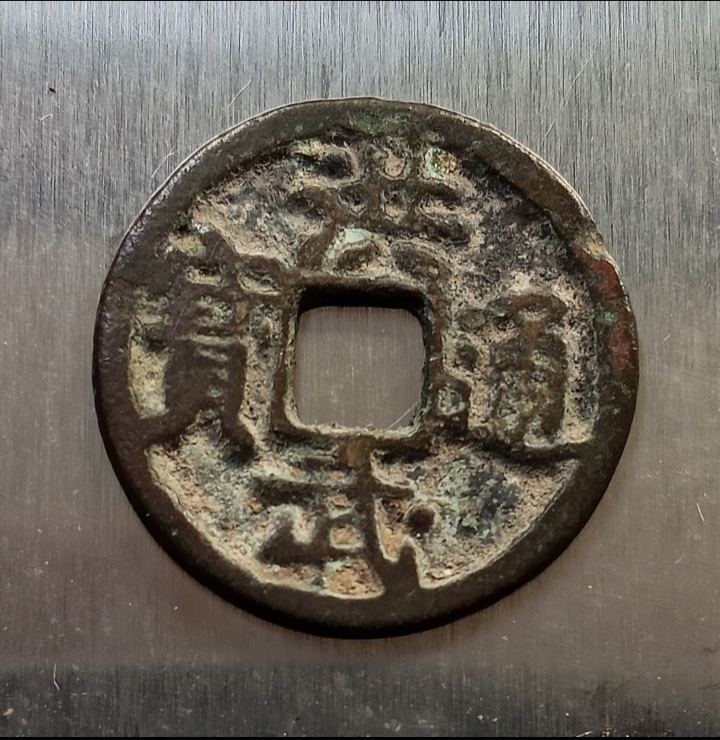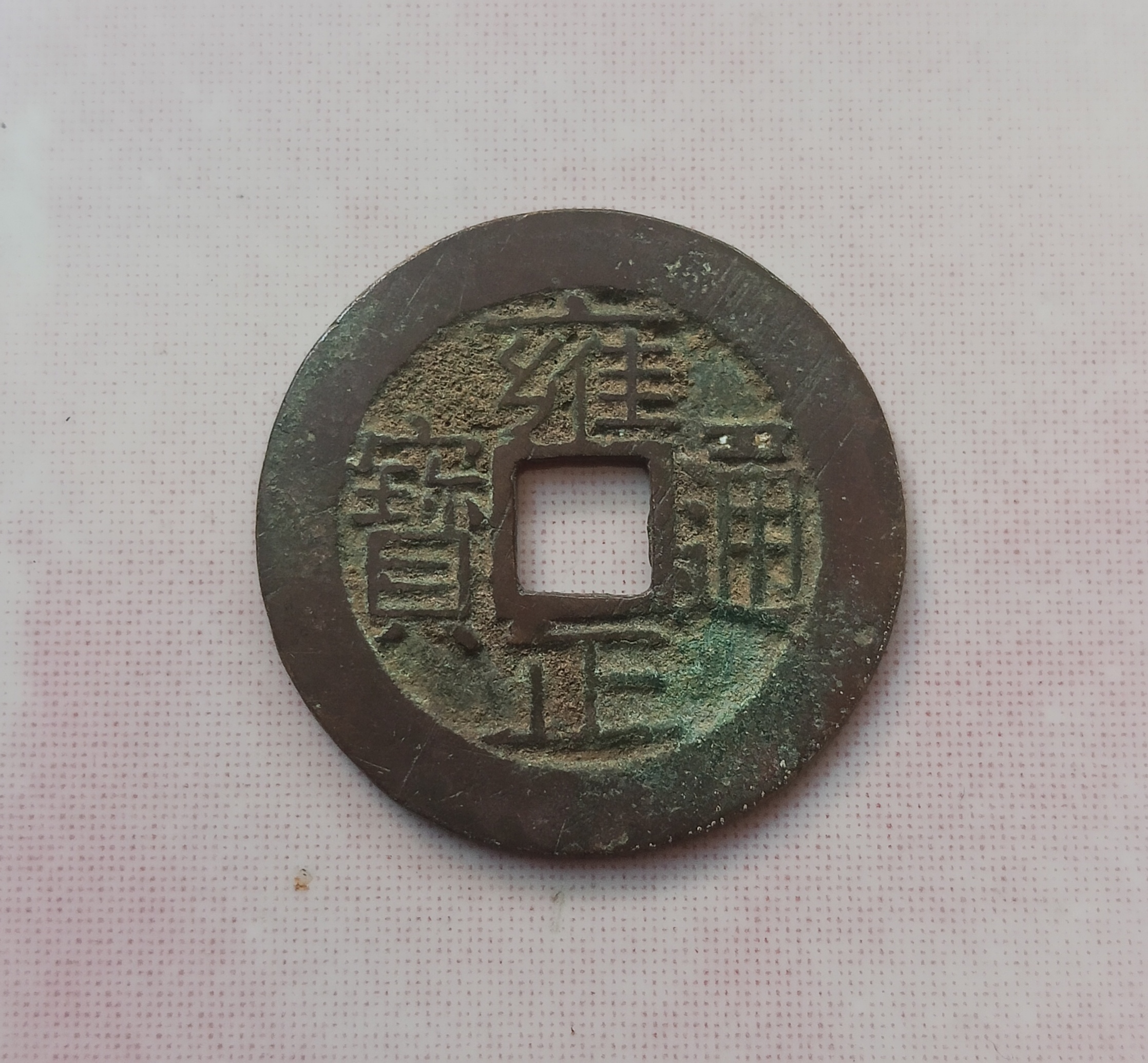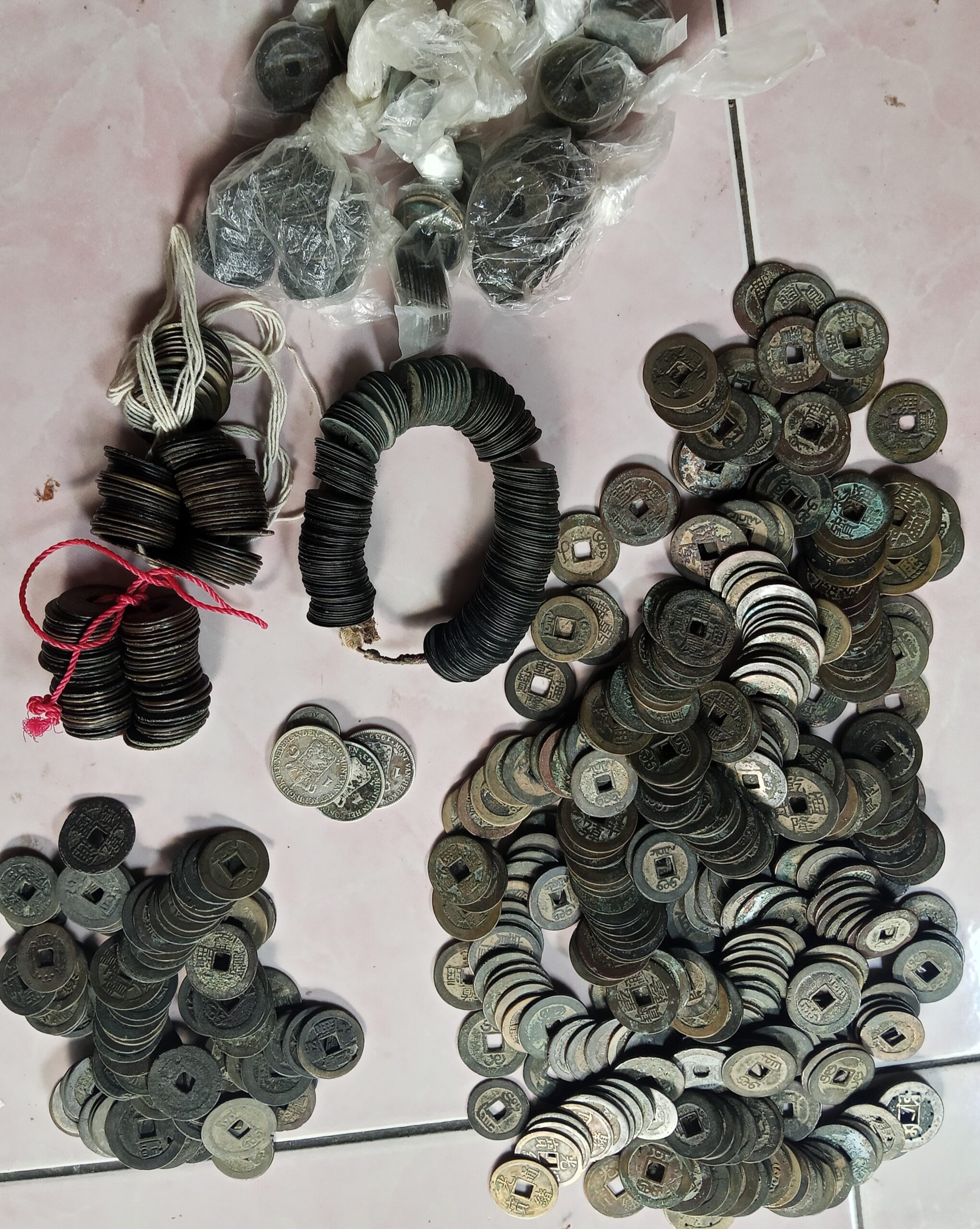
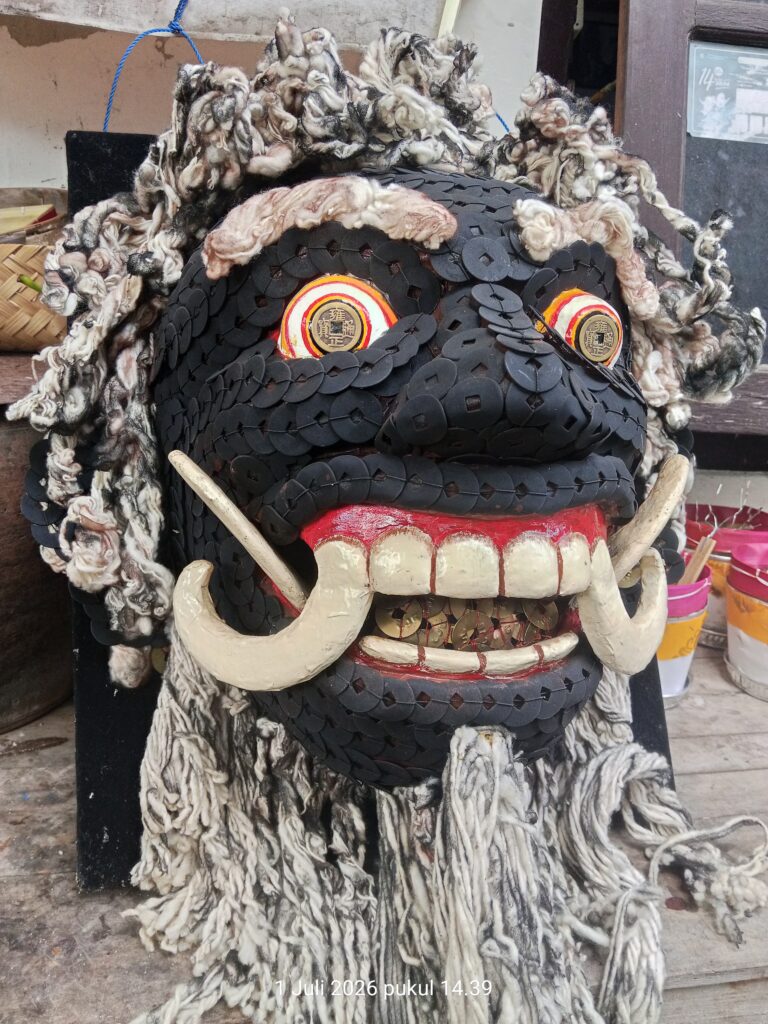
Before standard circular coins were established, early Chinese commerce relied on bartering with miniature bronze tokens shaped like the actual items people traded—such as knives, spades, and shells.
That changed around 221 BC when Qin Shi Huang, the First Emperor of China, unified the country. He abolished regional currencies and introduced the Ban Liang (半兩) coin. This standardized the round coin with the square hole, a format that remained virtually unchanged for over 2,200 years until the end of the Qing Dynasty and the birth of the Republic of China in 1912.
The design was highly practical. Because individual copper cash coins held a relatively low monetary value, citizens would thread them onto long strings—often in bundles of 100 or 1,000 coins (known as a chuàn)—making them much easier to count, carry over a shoulder, or store safely.
The shape of the Chinese cash coin is not accidental; it is a physical manifestation of ancient Chinese metaphysics.
The Round Rim: Represents Heaven (Tiān).
The Square Hole: Represents Earth (Dì).
The Inscription: Represents Man (Rén), specifically the reigning Emperor whose name was stamped on the coin.
Together, these three components represent the cosmic trinity (Tian-Di-Ren), symbolizing harmony between the universe, the earth, and humanity.
Because these coins circulated through the hands of millions of people for centuries, practitioners of Feng Shui believe they have absorbed immense amounts of human energy (Chi) and earthly power. Today, replicas and authentic antique coins are used as vital tools to attract wealth and block negative energies.
They are typically tied together using a red string or ribbon. In Chinese culture, red represents the Yang energy—the force of life, vitality, and fire—which activates the metal element of the coin and amplifies its power.
The number of coins grouped together changes the intent of the charm:
3 Coins: The most popular combination. It represents the trinity of Heaven, Earth, and Man, used in wallets and cash registers to attract continuous financial growth.
5 Coins: Represents the Five Emperors of the prosperous eras of the Qing Dynasty, frequently used for heavy-duty protection against evil spirits and bad luck.
6 Coins: Represents “heaven luck” and attracting mentors or helpful people into your business or career.
9 Coins: Symbolizes completion, infinity, and long-term, everlasting wealth.
To fully benefit from the energy of Chinese coins, placement is key:
The Front Door: Hanging three or six coins on the inside handle of your main entrance invites wealth into the household.
The Wealth Corner: In Feng Shui, the southeast corner of a room or house governs money. Placing a set of coins here stimulates financial abundance.
The Workspace: Keeping coins under a desk mat or near your computer draws career success and protects against office politics.
The Wallet: Tucking three small coins into your wallet ensures that money is constantly flowing in.
A Quick Tip on Orientation: Traditional coins have two distinct sides. The Yang side features four Chinese characters showing the emperor’s reign, while the Yin side usually has only two characters (often in Manchu script). When displaying them, always ensure the Yang side (four characters) faces upward or outward to radiate positive energy.